
Home » Wallcovering & Wallpaper Installation » How a wallpaper consultation saves you money
Wallpaper mistakes often become expensive before the first panel ever goes on the wall.
The wrong roll quantity, an unsuitable material, overlooked wall texture, a custom mural ordered to incorrect dimensions, or a product whose installation requirements do not match the existing surface can turn a straightforward project into additional material orders, wall repairs, delays, or even complete replacement.
A good wallpaper consultation is therefore less about choosing a pattern and more about evaluating the entire installation system: the wall, the wallcovering, the dimensions, the pattern repeat, the layout, the adhesive system, and the manufacturer’s requirements.
At Enjoy The Wall, these are the same factors we evaluate when planning professional wallpaper installation in the Denver metro area.
The price printed on a wallpaper roll tells only part of the story.
The actual cost of a finished wall may include:
wallpaper or wallcovering;
freight and shipping;
additional material required for pattern matching;
wall preparation;
primer and adhesive;
installation labor;
replacement material if the original quantity is insufficient;
corrective work when the substrate or product creates installation problems.
This is why the cheapest material is not necessarily the least expensive finished wall.
In our installation experience, some of the most avoidable costs begin with decisions made before installation: ordering only by square footage, assuming an existing wall is ready for wallpaper, or purchasing a product without reviewing how it is manufactured and installed.
A consultation gives us an opportunity to identify those issues before material is cut, ordered, or installed.
One of the easiest ways to waste money is to calculate wallpaper using wall area alone.
Wallpaper is installed in vertical panels, and patterned products must normally be positioned so that adjacent panels align correctly. As a result, usable material depends on several factors beyond total square footage.
These can include:
roll width;
roll length;
wall height;
pattern repeat;
match type;
number and width of walls;
doors and windows;
usable drops per roll;
installation layout;
additional material recommended for the specific project.
A large pattern repeat can substantially change the number of usable panels obtained from a roll.
This is particularly important with expensive designer wallcoverings. Ordering one roll too many is inconvenient. Ordering one roll too few can be significantly worse if the additional material comes from a different production lot or is no longer available.
For an initial quantity check, you can use our Wallpaper Calculator. For patterned or unusually sized products, however, the final calculation should also consider the manufacturer’s specifications and the actual room layout.
For a more detailed explanation of roll dimensions and pattern matching, see our Wallpaper Guide: Sizes, Repeats & Materials Explained.
A beautiful wallcovering cannot compensate for an unsuitable substrate.
Wall texture, previous repairs, glossy paint, damaged drywall, old adhesive, contamination, uneven surfaces, and other conditions can affect both appearance and adhesion.
This becomes particularly important with:
thin papers;
smooth solid-color wallcoverings;
metallic or reflective finishes;
murals;
some peel-and-stick products;
products that emphasize imperfections rather than concealing them.
The correct preparation depends on the existing wall and on the wallcovering being installed. There is no single preparation specification that applies to every wallpaper product.
Sometimes only limited preparation is necessary. In other situations, the wall may need repairs, sanding, smoothing, priming, or more extensive correction before installation.
Evaluating the substrate early allows the preparation cost to become part of the project plan rather than an unexpected expense after the wallpaper has already arrived.
We explain this process in more detail on our wallpaper removal and wall preparation service page.
The color beneath wallpaper can affect the finished installation, particularly with light, thin, translucent, or dark wallcoverings where small gaps or edge conditions may be visually noticeable.
That does not mean every dark wall must automatically be repainted white before wallpaper installation.
The correct approach depends on the product.
For some light-colored materials, a dark substrate may contribute to unwanted show-through. For some dark wallcoverings, an appropriately colored substrate or primer can reduce contrast if a seam becomes visible.
The important point is to evaluate the actual material rather than applying a universal rule.
Manufacturer instructions remain the primary technical reference for a specific wallcovering.
Wallpaper products that look similar online can behave very differently during installation.
Construction, backing, surface coating, thickness, dimensional stability, edge quality, print consistency, and installation method all affect the finished result.
Many non-woven wallcoverings are stable and relatively installer-friendly, but individual products still vary in thickness, print quality, edge construction, and manufacturer requirements.
Vinyl can be a practical option where durability and cleanability are priorities. Commercial vinyl and Type II wallcoverings are separate categories with their own substrate and installation considerations.
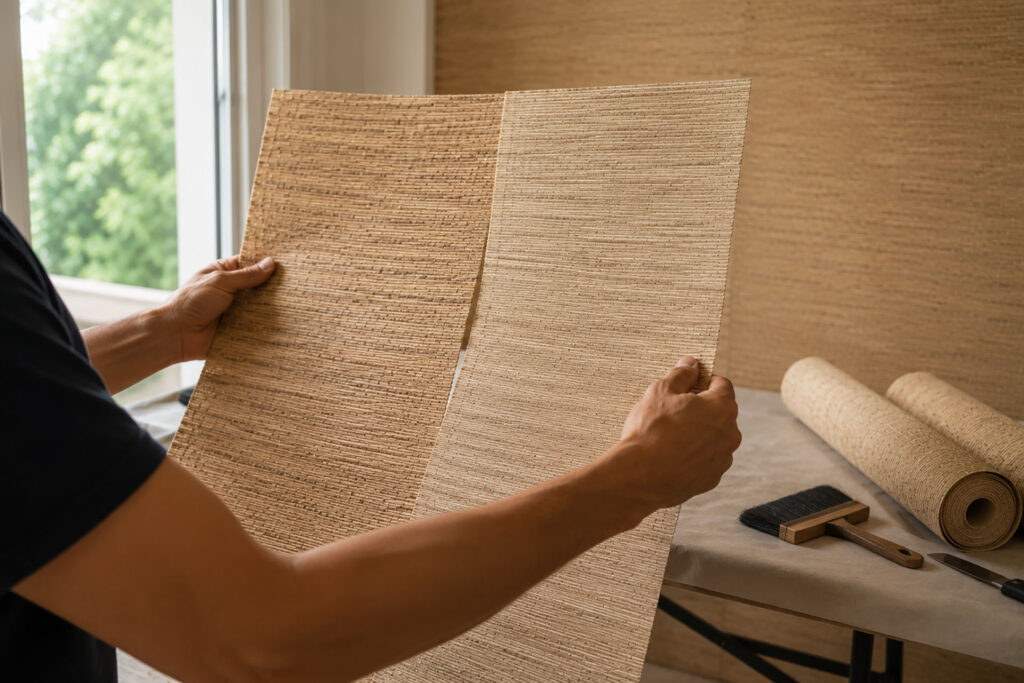
Natural wallcoverings can create exceptional texture, but visible panel-to-panel variation and seams may be inherent characteristics of the material rather than installation defects.
These products can require greater attention to substrate condition, adhesive, handling, layout and lighting.
Peel-and-stick does not eliminate the need for wall evaluation. Many products are less tolerant of textured, dusty or imperfect substrates than buyers expect.
This is why we look at the complete wallcovering system rather than classifying a product simply as “good” or “bad.”
Custom murals introduce another category of risk because the product may be manufactured specifically for one wall.
Before ordering, the important questions can include:
What are the exact wall dimensions?
Is the wall square and reasonably straight?
How much production bleed is provided?
Where should the focal point of the image be positioned?
Will doors, windows, cabinetry or furniture interfere with important parts of the design?
How wide are the manufactured panels?
Is the image intended to be trimmed on site?
What substrate and adhesive does the manufacturer require?
If the artwork is produced to incorrect dimensions, installation cannot recreate portions of an image that were never printed.
A pre-order review is especially useful when a mural contains faces, architectural elements, typography, horizon lines, or other features whose position matters visually.
Price alone does not determine quality.
We have worked with products from both large manufacturers and smaller specialty producers. A small company is not automatically a poor manufacturer, and a high price does not automatically guarantee an easy installation.
The issue is production quality and predictability.
Problems we watch for include:
inconsistent panel dimensions;
weak or unstable substrates;
inaccurate pattern registration;
printing that does not align from panel to panel;
damaged edges;
inadequate installation instructions;
inconsistent color;
unclear adhesive requirements.
With custom-printed wallpaper, these problems may not become obvious until the installer begins laying out or hanging the material.
That is one reason Enjoy The Wall takes a selective approach to sourcing. We prefer products and manufacturers whose materials we can confidently support through the installation process.
You can see the manufacturers and collections we work with on our wallpaper brands page.
Correct pattern matching is only one part of layout.
An installer may also need to determine:
where the first panel should begin;
which wall or architectural feature should receive visual priority;
where the pattern should center;
how the design will terminate in corners;
where unavoidable pattern loss should occur;
how the design interacts with windows, doors, mirrors, cabinetry or built-ins.
This becomes especially important with large geometrics, murals, oversized florals, strong vertical elements and highly symmetrical designs.
A layout decision made after several panels have already been cut may be impossible to reverse without using additional material.
Planning first is cheaper than correcting later.
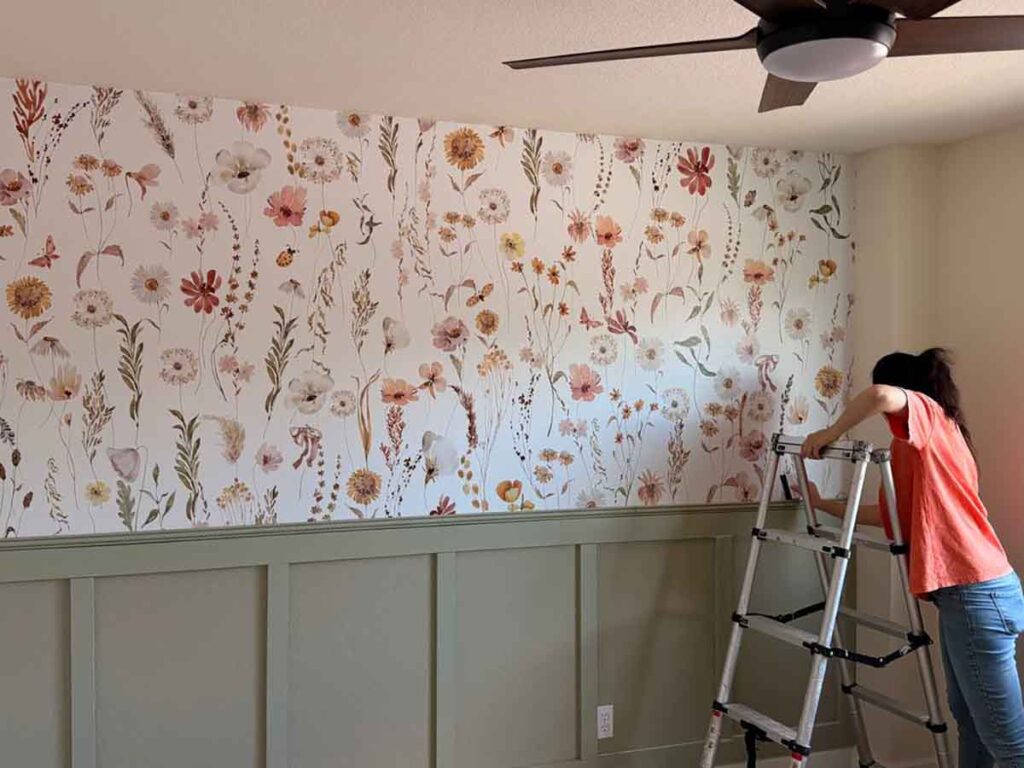
Wall texture is common in Colorado homes, and its effect depends on both its severity and the wallcovering being installed.
Some materials may tolerate minor surface variation better than others. Thin, smooth, reflective, rigid, or self-adhesive materials can make texture considerably more noticeable.
Adhesion can also be affected.
For that reason, we do not assume that a product can simply be installed over an existing textured wall because the manufacturer calls it “easy to install.”
The wall and the product should be evaluated together.
Our detailed guide, Can You Put Wallpaper on Textured Walls?, explains the issue in more depth.
Room conditions matter.
A powder room, children’s room, commercial corridor, bedroom and restaurant do not necessarily need the same wallcovering characteristics.
Depending on the project, we may consider:
cleanability;
moisture exposure;
direct sunlight;
abrasion;
traffic;
ventilation;
wall condition;
expected service life;
repairability;
manufacturer limitations.
The objective is not always to select the heaviest or most expensive material.
It is to select a material appropriate for the actual environment.
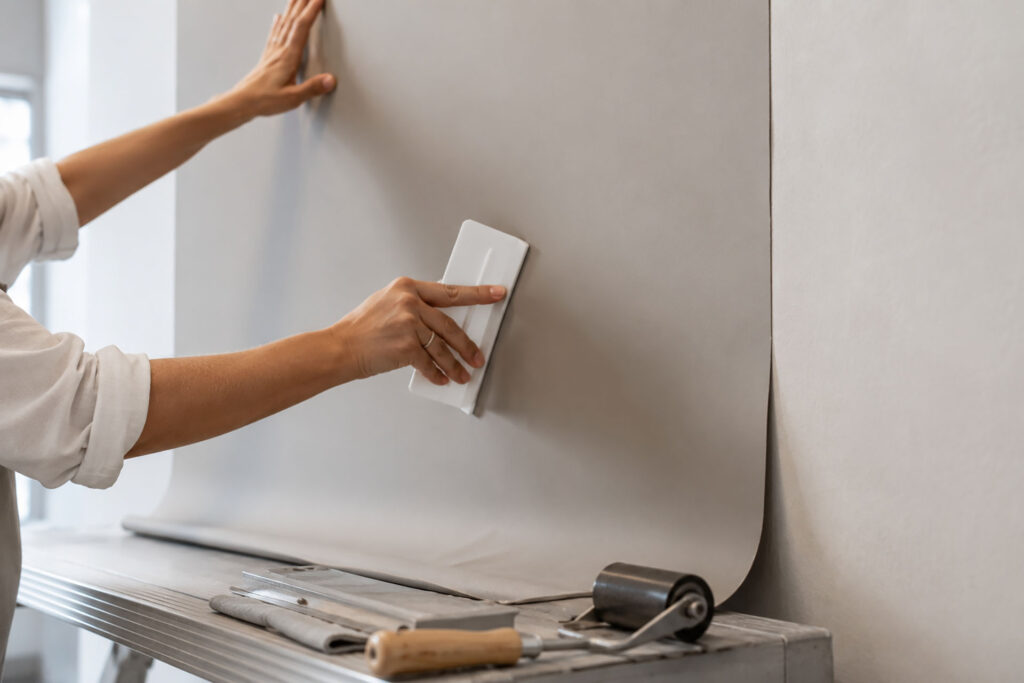
Wallpaper installation is not governed by one universal adhesive, primer, booking time, or preparation method.
Requirements vary by product.
Before installation, relevant documentation may specify:
recommended adhesive;
primer requirements;
paste-the-wall or paste-the-paper installation;
booking time;
seam technique;
trimming method;
handling instructions;
cleaning limitations;
substrate requirements.
When a manufacturer provides product-specific instructions, those instructions should be reviewed as part of the installation plan.
A professional consultation can identify conflicts between the selected wallpaper, the wall condition and the intended installation method before they become expensive problems.
A detailed review is particularly useful when:
the wallpaper is expensive or difficult to replace;
the pattern repeat is large;
several rooms are being ordered at once;
the wall is textured or damaged;
the product is custom printed;
you are ordering a mural to exact dimensions;
the wallpaper is natural fiber, textile, veneer, metallic or another specialty material;
the project includes high walls, stairwells or ceilings;
the manufacturer has unusual installation requirements;
you are uncertain how much material to order;
a designer, builder and installer need to coordinate the same project.
For a simple accent wall with a straightforward product and a properly prepared surface, the planning process may be correspondingly simple.
The point is not to make every wallpaper project complicated. It is to identify complexity before it becomes expensive.
When evaluating a project, our team may review the wallcovering specification, existing wall condition, dimensions, pattern repeat, layout, quantity and preparation requirements.
The exact process depends on the project.
For clients who have not yet purchased their wallpaper, an early review can also help determine whether the selected material makes sense for the room and whether enough material is being ordered.
For clients who already have the wallpaper, the same evaluation can identify preparation, layout or product issues before installation begins.
This is where field experience becomes particularly valuable: many installation problems are easier to recognize when you have already encountered similar materials, substrates and site conditions in completed projects.
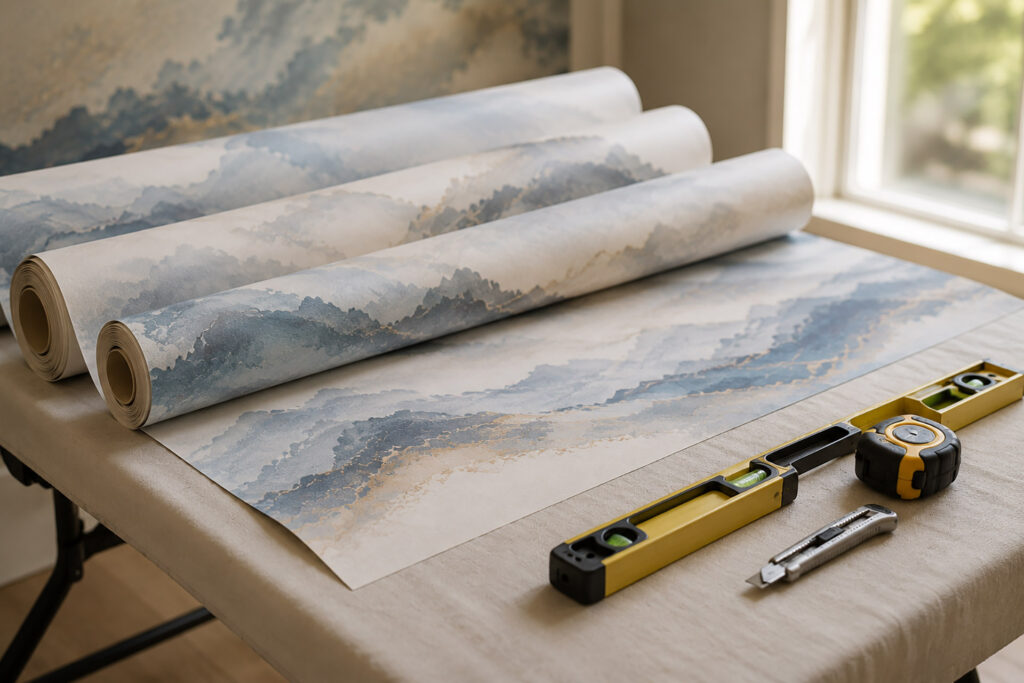
A wallpaper consultation can save money by identifying problems before material is ordered, cut or installed.
The most important points are:
Do not calculate patterned wallpaper from square footage alone.
Evaluate the wall before assuming it is ready for installation.
Review the actual wallcovering construction and manufacturer specifications.
Plan custom mural dimensions and image placement before production.
Consider preparation as part of the total installed project cost.
Decide critical pattern placement before the first panel is cut.
Choose materials according to the room and substrate, not appearance alone.
When wallpaper is expensive or difficult to replace, planning becomes even more valuable.
The objective is simple: make the expensive decisions before they become expensive mistakes.
It can be particularly valuable when material, quantity, wall condition or layout is uncertain. Identifying one incorrect measurement, unsuitable substrate, or ordering issue before installation can prevent additional material purchases and rework.
For complex or expensive projects, it is often useful. An installer can review quantity, wall condition, pattern repeat and installation requirements before the order is finalized.
Square footage is only a starting point. Roll dimensions, wall height, pattern repeat, match type and usable drops per roll also affect the required quantity.
It depends on the wallcovering and the existing substrate. Some products reveal surface imperfections much more readily than others, so preparation requirements should be determined for the specific installation.
Sometimes, but the material should be evaluated first. Light or partially translucent wallcoverings may show substrate color, while dark wallcoverings may benefit from a coordinated background treatment depending on the product and installation conditions.
Not necessarily. Eliminating separate adhesive does not eliminate substrate preparation, layout, pattern matching or adhesion requirements.
Usually some additional material is prudent, but the correct amount depends on the project. Pattern repeat, room dimensions, roll configuration and future repair considerations should all be taken into account.
Yes, the product can still be evaluated before installation. Reviewing the wallcovering, quantity, wall condition and manufacturer’s instructions before cutting begins can help identify potential problems while there is still time to address them.
Have questions about a particular wallpaper brand, an unusual wall surface, or a challenging installation? Our team is available to discuss your concerns and help you understand the available options.
+1 (720) 825-7157
Proudly working with clients statewide.
If you are planning a wallpaper project in the Denver metro area or elsewhere in Colorado, it is often easier to solve material, quantity and wall-preparation questions before the wallpaper is ordered or installation begins.
Enjoy The Wall works with homeowners, interior designers, architects, builders and general contractors on residential and commercial wallcovering projects.
We can evaluate the project conditions, review the material and installation requirements, determine preparation needs, and complete the installation once the project is ready.
Explore Wallpaper & Wallcovering Services · All Services
For Interior Designers, Architects & Builders · View Recent Projects

Find wallpaper, decorative plaster, brands, guides, FAQs and blog articles.