
Home » Wallcovering & Wallpaper Installation » Pottery Barn Wallpaper
Pottery Barn interiors are known for warm neutrals, natural textures, traditional patterns, layered fabrics, and rooms that feel comfortable rather than overly formal. Wallpaper can fit naturally into that aesthetic — from understated stripes and grasscloth-inspired textures to florals, toile, botanical patterns, and larger scenic designs.
Pottery Barn also currently sells wallpaper directly, including traditional wallpaper, removable products, designer collaborations, and wallpaper samples. But choosing a pattern is only part of the project. The wall surface, wallpaper construction, backing, adhesive system, pattern repeat, and intended room can all affect how the finished installation performs.
For homeowners planning a permanent installation, our professional wallpaper installation services in the Denver metro area include material review, wall evaluation, preparation recommendations, layout planning, and installation.
Yes. Pottery Barn currently offers wallpaper and wallpaper samples in a variety of styles and constructions.
The selection can change over time and may include products from outside designers and manufacturers as well as removable wallcoverings sold through Pottery Barn. This is different from simply choosing wallpaper that is “Pottery Barn inspired.”
That distinction matters when planning an installation because two wallpapers with a similar appearance can behave very differently on the wall.
A traditional wallpaper installed with a separate adhesive, for example, is a different installation system from a self-adhesive removable product. Before ordering, we recommend checking the manufacturer specifications rather than choosing solely by pattern or color.
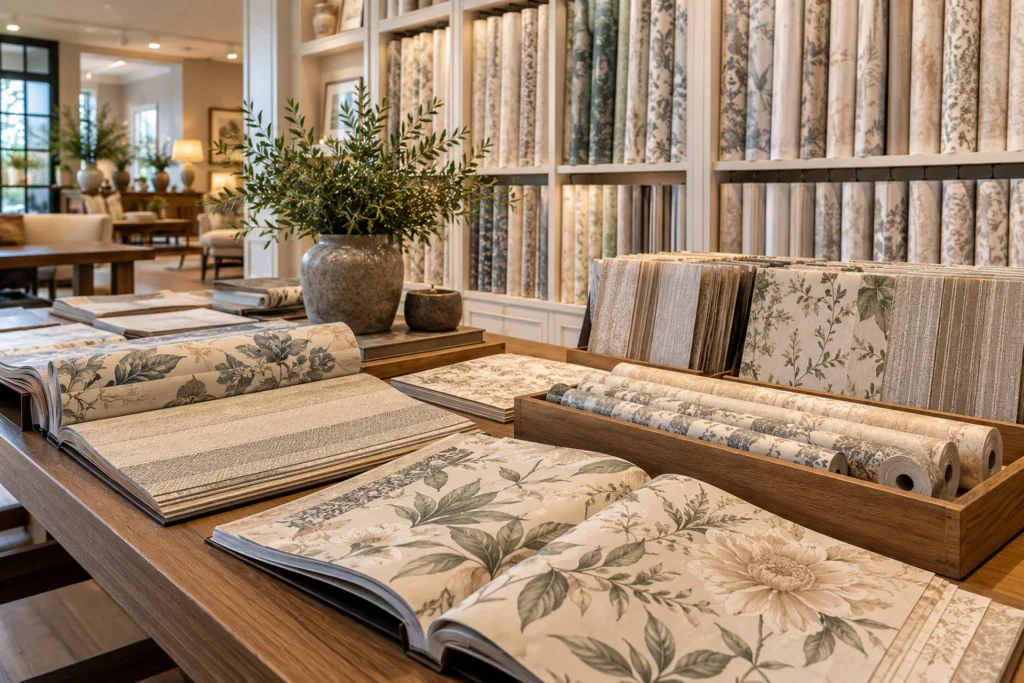
There is no single Pottery Barn wallpaper look. The broader aesthetic usually combines traditional American interiors with relaxed, natural materials and relatively restrained color palettes.
Rather than using extremely graphic patterns throughout a room, this style often relies on texture, repetition, furniture, wood tones, fabrics, lighting, and architectural details to work together.
Soft stripes and plaids work particularly well in bedrooms, offices, nurseries, powder rooms, and spaces with traditional millwork.
Their visual simplicity can be deceptive from an installation standpoint. Long vertical or horizontal lines make walls, ceilings, corners, windows, and doors easy to compare visually, so layout becomes particularly important.
Botanical prints can range from small traditional florals to large-scale leaves and garden-inspired designs.
They pair naturally with painted trim, wainscoting, wood furniture, linen fabrics, and other materials commonly associated with Pottery Barn interiors.
For nurseries and children’s rooms, softer florals can create a traditional look without making the room feel overly themed.
Toile, paisley, medallion, and other historically influenced patterns can work especially well in dining rooms, bedrooms, powder rooms, entryways, and traditional homes.
With these designs, pattern placement may matter as much as pattern matching. A technically correct installation can still look poorly planned if important elements of the design are awkwardly cut around doors, windows, cabinetry, or focal walls.
Grasscloth, linen effects, woven textures, and other natural-looking surfaces are a strong match for the relaxed Pottery Barn aesthetic.
However, a visual grasscloth pattern and genuine natural-fiber grasscloth are not the same material.
Real grasscloth can have visible panel variation, texture differences, and seams as part of its natural appearance. If you are considering natural wallcovering, our guide to grasscloth and natural fiber installation explains some of these characteristics in more detail.
One of the most important decisions is not the pattern but the installation system.
Some wallpaper sold through Pottery Barn is removable or self-adhesive. Other wallcoverings use more traditional installation methods. Neither category should be judged only by appearance.
Removable wallpaper can make sense for certain applications, particularly when temporary installation is part of the goal. But the wall still needs to be compatible with the product. Some self-adhesive manufacturers specifically discourage installation over textured walls or certain paint finishes.
Traditional wallpapers may provide the installer with more control over positioning, pattern alignment, seams, and adhesive selection, but requirements vary by product.
For permanent projects, we generally prefer evaluating the actual wallcovering specification and substrate rather than assuming that “peel and stick” automatically means easier installation.
If you are comparing the systems, see our guide to peel-and-stick wallpaper installation.
A beautiful wallpaper cannot correct a poorly prepared substrate.
Texture, patched drywall, incompatible paint, uneven corners, existing wallcovering, damaged surfaces, and other conditions can affect the final result. Some patterns also reveal imperfections more readily than others.
This is particularly important with stripes, metallic details, smooth papers, and wallcoverings installed in strong side lighting.
The correct amount of preparation depends on the actual wall and the wallcovering being installed. There is no universal preparation specification for every wallpaper project.
For walls that need correction before installation, see our wallpaper removal and wall preparation services.
A wallpaper sample can look very different from a full wall.
Small samples are useful for evaluating color, texture, print quality, and how the material responds to the room’s lighting. They do not always communicate the full scale of the repeat.
Before ordering, consider the width and height of the wall, ceiling height, furniture placement, windows and doors, architectural trim, and where the dominant part of the pattern will fall.
Large-scale botanical or scenic designs often need more deliberate placement than small repeating patterns. Stripes require careful planning for vertical reference lines. Highly symmetrical patterns can make small construction irregularities more visually obvious.
This is one reason we recommend reviewing the full product specification — not just the product photograph.
Wallpaper works particularly well with the traditional furniture, painted trim, wainscoting, and softer colors frequently used in Pottery Barn-style nurseries.
Florals, woodland motifs, subtle stripes, botanical prints, toile, and restrained geometric patterns can create a room that still works as the child grows.
For a nursery with wainscoting, the relationship between the wallpaper pattern and the top line of the molding should be considered before the first panel is installed. The strongest visual element of the pattern should not appear accidentally cut off or crowded against the trim.
The same principle applies around windows, doors, built-ins, and other architectural elements.
For more room-specific ideas, see our article on creative wallpaper ideas for children’s rooms.
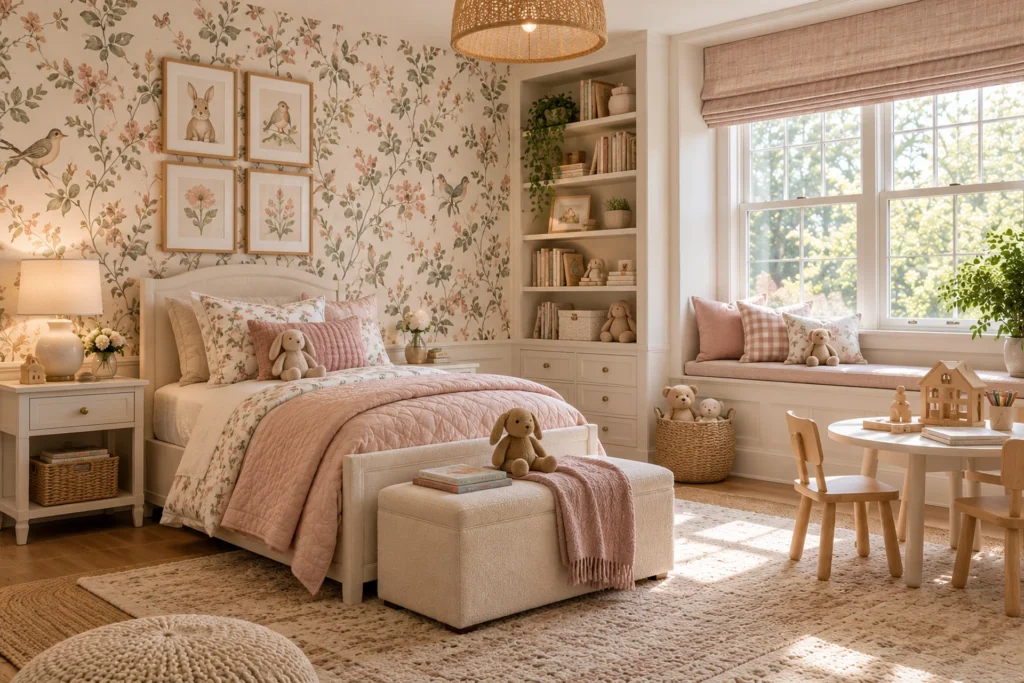
A Pottery Barn-inspired room usually works best when the wallpaper participates in the overall composition rather than becoming an isolated decorative element.
Natural wood, painted cabinetry, linen and cotton fabrics, antique or brushed metal finishes, traditional lighting, rugs, and upholstered furniture can all influence which wallpaper feels appropriate.
The wallpaper does not necessarily need to match the furniture directly. Often it is more effective to repeat one color, texture, or visual character elsewhere in the room.
A subtle stripe might reinforce architectural lines. A botanical pattern may connect with natural wood and fabrics. A traditional floral can soften an otherwise simple room.
For larger rooms, the wallpaper may cover all walls. In other situations, a single carefully planned wall can provide enough pattern without dominating the interior. Our guide to accent wall ideas explores that approach in more detail.
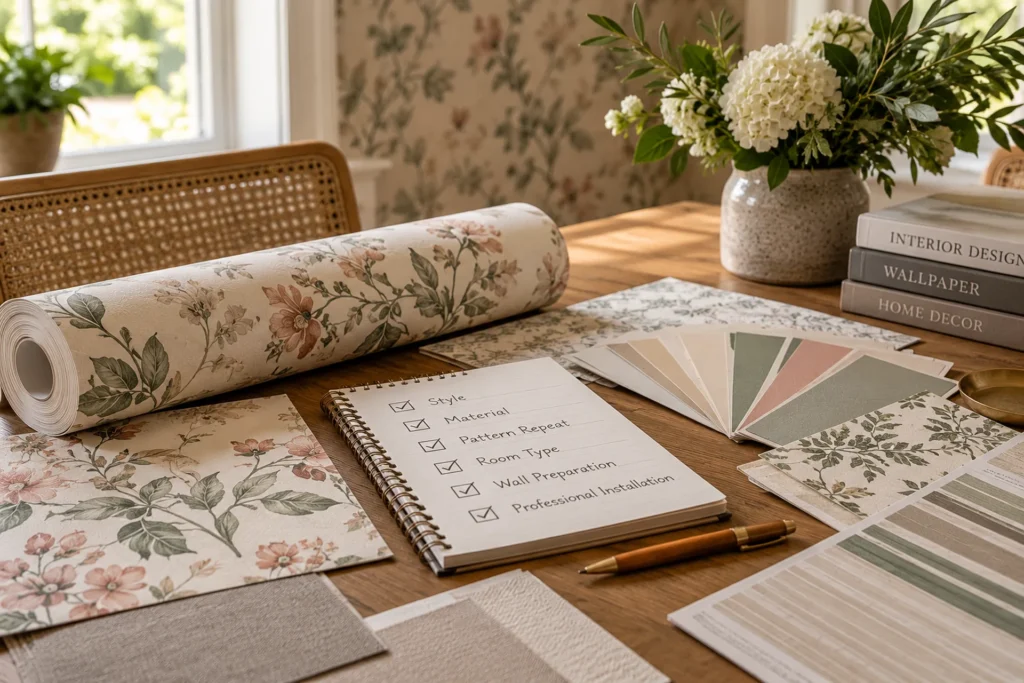
Before ordering any wallpaper — whether from Pottery Barn or another source — verify the product dimensions, roll configuration, pattern repeat, match type, backing or construction, installation instructions, and recommended wall conditions.
Do not calculate quantity from square footage alone when the wallpaper has a meaningful repeat.
Windows and doors also do not always reduce the required quantity in the way homeowners expect because usable panels still need to be cut according to the repeat and layout.
If you are considering other manufacturers or designer wallcoverings, you can also explore the wallpaper brands we work with.
Enjoy The Wall works with both homeowner-supplied wallpaper and selected materials sourced for client projects. We focus on wallcoverings we are comfortable specifying and installing rather than treating wallpaper simply as a retail product.
The more important the pattern placement, surface quality, or material cost becomes, the more useful it is to plan the installation before ordering.
Enjoy The Wall works with homeowners, interior designers, builders, and other trade professionals on residential and commercial wallpaper projects throughout the Denver metro area and across Colorado.
For designer and higher-end materials, we can review installation requirements, wall conditions, layout considerations, pattern repeats, and other technical details before installation. Learn more about our designer wallpaper installation services.
Pottery Barn now sells wallpaper, but the name on the retailer page does not determine how the material should be installed. The actual wallcovering construction and manufacturer specifications do.
Pottery Barn-style interiors often work particularly well with stripes, florals, botanical patterns, toile, natural textures, and restrained traditional designs.
Removable and traditional wallpaper are different installation systems and should be evaluated accordingly.
Wall preparation and pattern layout can have as much influence on the finished room as the wallpaper itself.
For expensive, large-scale, highly patterned, or permanent installations, evaluating the wallpaper and wall before ordering can prevent material and layout problems later.
Yes. Pottery Barn currently sells wallpaper and wallpaper samples. Its selection can include removable wallcoverings, traditional wallpaper, designer collaborations, and products supplied by other wallpaper brands.
No. Product construction varies. Check the specifications for the individual wallpaper rather than assuming every product uses the same installation system.
It depends on the product and the degree of texture. Some self-adhesive wallcoverings specifically require smooth surfaces, while other products may still require preparation before installation. Manufacturer instructions should be checked for the specific wallpaper.
Not necessarily. Removing the need for separate paste does not eliminate problems with wall texture, positioning, pattern alignment, stretching, adhesion, corners, or surface compatibility.
Soft florals, botanical patterns, traditional stripes, toile, and restrained natural textures are all strong options. The best choice also depends on furniture, trim, wainscoting, lighting, and the scale of the room.
You can, but reviewing the product first can prevent expensive mistakes. Pattern repeat, roll dimensions, wall conditions, layout, and manufacturer requirements may affect both quantity and installation.
Yes, subject to review of the wallcovering and project conditions. We install many types of homeowner- and designer-supplied wallcoverings throughout the Denver metro area and Colorado.
Have questions about Pottery Barn wallpaper, material selection, or installation requirements? Enjoy The Wall helps homeowners and designers throughout Colorado choose suitable wallcoverings and plan professional installations.
+1 (720) 825-7157
Proudly working with clients statewide.
Considering Pottery Barn wallpaper, a similar designer wallcovering, or a complete wallpaper project?
Enjoy The Wall can review the material, evaluate the wall condition, determine preparation requirements, plan the layout, and complete the installation when the project is ready.
Explore Wallpaper & Wallcovering Services · All Services
For Interior Designers, Architects & Builders · View Recent Projects

Find wallpaper, decorative plaster, brands, guides, FAQs and blog articles.